
Emergency Air Duct Cleaning Near Me: What Lakewood Homeowners Should Do First
The first thing to do in a real duct emergency is shut the HVAC system off at the thermostat and leave it off. Turning on the blower after sewage backup, a dead animal in the ductwork, or post-flood moisture pushes whatever is in those ducts into every room before any technician gets there. If you would rather not handle this yourself, call (833) 593-4030 and we will walk you through the first steps on the phone. We answer 24/7.
Most situations that feel like emergencies are not. A musty smell from the vents, dust buildup after a renovation, or a sudden allergy flare-up can usually wait for a scheduled appointment. But three scenarios deserve immediate action, and knowing the difference is the whole game in Lakewood.
What Actually Counts as a Duct Emergency
A true duct emergency means the system now contains something that should never be in an air stream and that will get worse the longer it sits. Three situations meet that bar.
Sewage or gray water backup into the ductwork. If a drain line backed up and liquid reached your ducts, the contamination is already inside the system. HVAC components like the blower, coil, and interior insulation can absorb that moisture within hours. Running the fan spreads aerosolized bacteria through the house. This is not a cleaning job you schedule for next week.
Dead animal contamination. Rats and possums are common in the Long Beach-adjacent neighborhoods around Lakewood. They access ductwork through exterior penetrations where the plenum meets the roofline or crawlspace. When one dies inside the system, the blower pushes decomposition particles into the living space. You will smell it, and that smell is a signal that the source is inside the air path, not under the house.
Post-flood moisture and visible mold colonization. Lakewood gets real rain during El Niño winters. When water enters ductwork through a leak or a flood event, the interior insulation can stay damp for weeks. Mold begins to colonize on that saturated fiberglass. The ducts need assessment before the system runs again, not just a wipe-down of the register faces.
What does not qualify as an emergency? Dust accumulation, pet hair, a stale smell when the heat first kicks on in fall, or a renovation that left drywall dust in the registers. These are legitimate air duct cleaning jobs, but they can be scheduled. Calling them emergencies leads to rushed work and higher prices for no reason.
What to Do in the First 60 Minutes
If you have a real emergency on your hands, the sequence matters more than speed. Do these steps in order, and do them before you call a company so you can describe the situation accurately.
- Shut the system off at the thermostat. Switch the fan setting from Auto to Off, then set the mode to Off. Do not just turn the temperature up. The fan can still cycle on its own if it is set to Auto.
- Close the supply registers in the affected rooms. This is temporary containment. Tape a piece of plastic sheeting or a trash bag over the register openings if the smell is strong. Do not seal them permanently and do not block the return vent.
- Do not open the return air grille. If an animal died in the system, you do not want to see it, and you do not want to release more particles into the room. Leave that to a technician wearing proper respiratory protection.
- Do not spray anything into the ducts. No bleach, no disinfectant spray, no air freshener. You will drive contamination deeper into the insulation and make the eventual cleaning more difficult.
- Take photos of any visible water damage, staining, or exterior penetrations. Documentation matters for insurance, and we will get to that below.
- Call a duct specialist, not a general handyman. You need someone who can inspect the full system and contain the problem before cleaning begins.
If the emergency involves sewage or flood water, shut off the HVAC circuit breaker at the panel as well. This prevents any chance of the system cycling on while you wait for a technician.
What Emergency Duct Cleaning Should Actually Involve
Here is what separates a professional response from a company that shows up with a vacuum and a brush. A reputable firm will inspect and contain before any cleaning happens. If a company quotes you a price over the phone without asking about the source of the problem, hang up and call someone else.
The proper sequence looks like this:
- Inspection first. A technician should assess the full duct system, including the plenum, return drop, and trunk lines. For animal or mold contamination, they should use a camera to locate the source before anything gets disturbed.
- Containment second. The affected section gets sealed off so that cleaning agitation does not push particulate into clean portions of the ductwork or into the living space.
- Negative air where needed. In contamination scenarios, the work area should be held under negative pressure with a HEPA-filtered air scrubber. This is standard in remediation work and prevents cross-contamination.
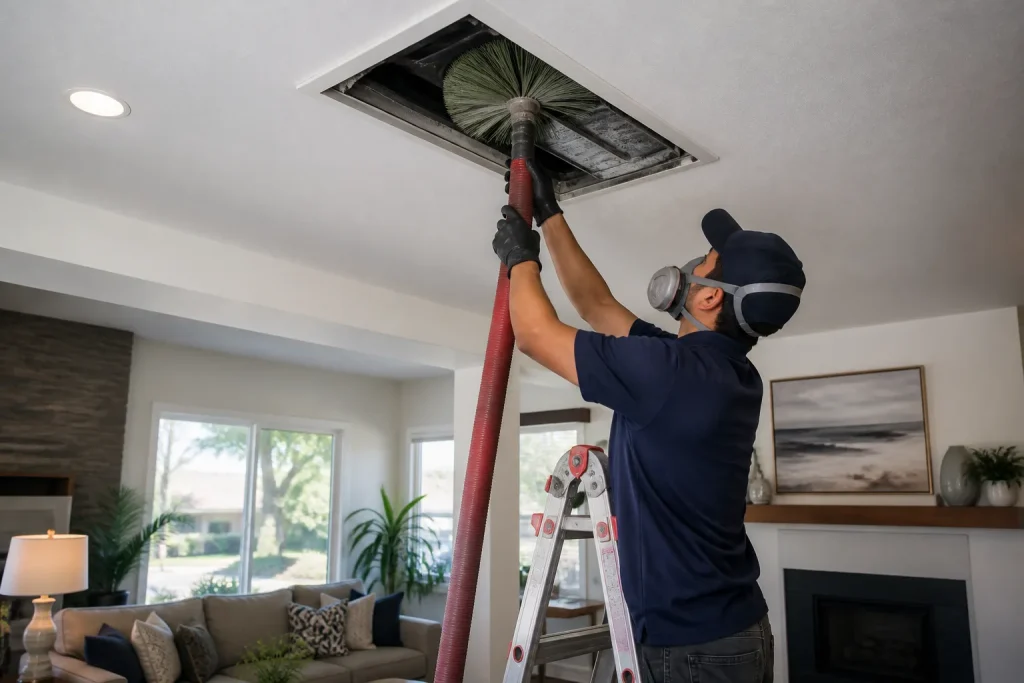
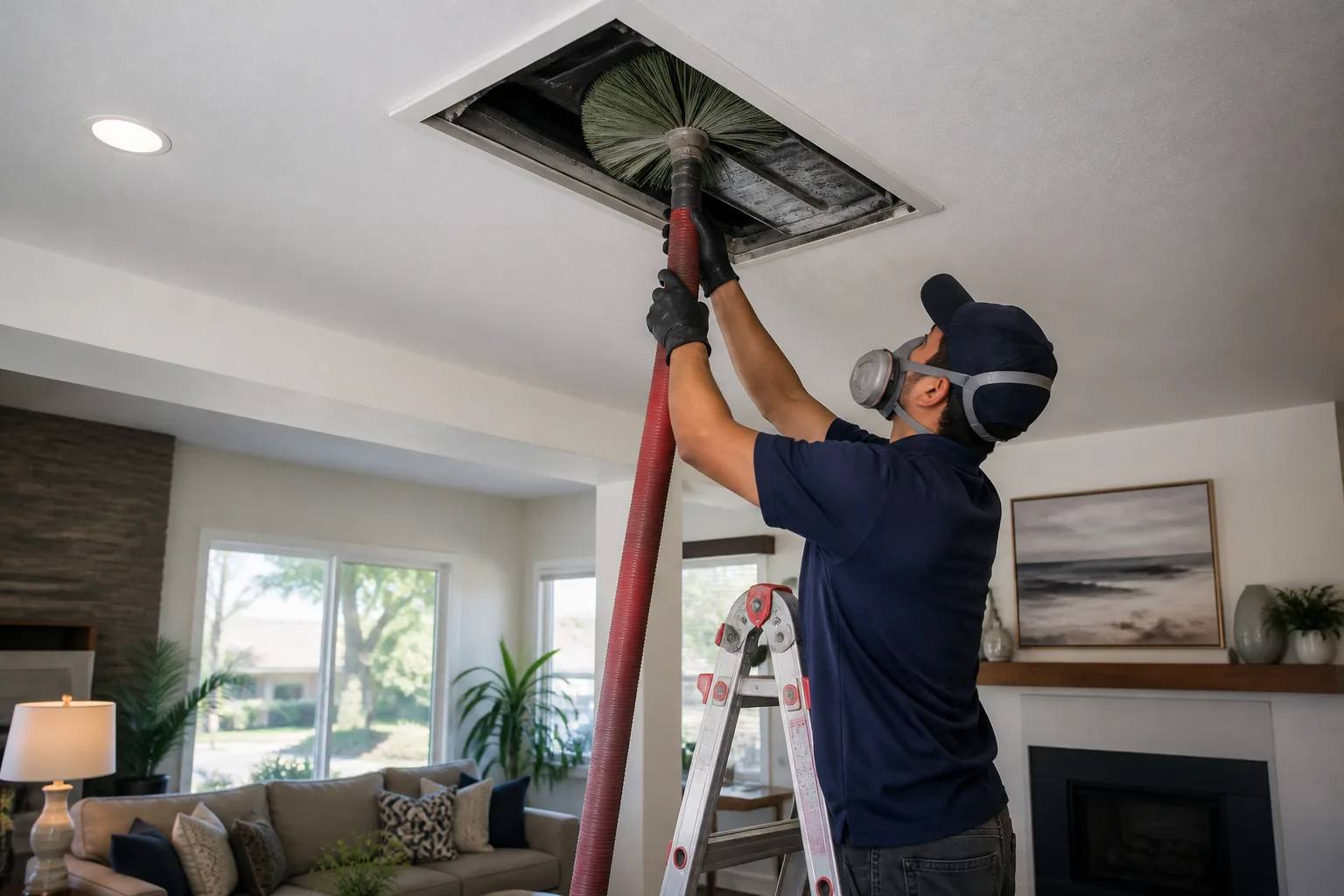
- Mechanical agitation plus collection. This is where equipment matters. Rotobrush and Nikro systems use powered brush heads that contact the duct walls and drive debris toward a HEPA-filtered collection unit. A shop vac taped to a register is not the same thing.
- Post-cleaning verification. Photos before and after, from inside the ducts. If a company cannot show you the inside of your own ductwork after the job, you have no way to verify the work was done.
Fortress Air Duct Cleaning runs professional-grade Rotobrush and Nikro equipment, the same class of tooling used in commercial and remediation projects. We also work with Abatement Technologies air filtration systems, which means we understand containment and air scrubbing at a remediation standard, not just surface cleaning.
Lakewood-Specific Scenarios We Prepare For
Lakewood sits inland from Long Beach, and the housing stock and wildlife patterns create predictable duct emergencies. Knowing what tends to happen here helps you act faster when it does.
El Niño winters bring sustained rain events. Flat roofs and older HVAC penetrations leak. Water follows the path of least resistance, which often means running down the duct chase and pooling inside the return plenum. The result is saturated duct insulation that never dries on its own because the duct interior stays dark and still.
Rats and possums are the other constant. The neighborhoods closest to Long Beach see regular rodent pressure, and ductwork penetrations at the roofline or in crawlspaces are common entry points. Once an animal gets into the system, it can travel through the trunk lines before dying in a branch run. The smell moves through the whole floor plan, but the source is usually localized. A camera inspection finds it in minutes.
Older Lakewood homes often have original duct systems from the 1950s and 1960s. The metal is still solid in many cases, but the internal insulation and sealing have degraded. That makes post-flood moisture events more serious. The water does not just bead on the metal; it soaks into the insulation wrap, and that is where mold takes hold.
When we encounter damage during a cleaning, we do not stop and refer you to a second contractor. Air duct repair is something we handle in the same visit. Damaged sections get identified, cut out, and replaced while the system is already open. You are not waiting weeks with a disconnected duct run while another company schedules you.
Documenting the Emergency for Insurance
Insurance claims for duct contamination succeed or fail on documentation. What you capture in the first hours matters more than what a technician sees days later, because the initial condition tells the story of causation.
Take photos of everything before anyone touches the system. Water staining on ceilings below the duct runs. The exterior penetration where water or an animal entered. Any visible mold on register faces or return grilles. The wet area around the HVAC closet. Wide shots that show the room context, not just close-ups.
Do not start any cleanup before photos are taken. Insurance adjusters look for the pre-remediation condition, and once surfaces are wiped down or duct sections are removed, the evidence is gone. If you have already started cleaning, stop and photograph what remains.
Keep a log of what happened and when. A simple notebook entry with the date, time, what you observed, and what you did works. If you shut the system off, note that. If you sealed registers, note which rooms. These details establish a timeline that supports the claim.
During remediation, ask for photos from inside the ducts before and after cleaning. Fortress provides this as standard practice, and it gives your insurer visual proof that the work addressed the source, not just the symptoms. After the job is complete, keep the written estimate and the final invoice. They should describe the scope of work in plain language an adjuster can follow.
One more thing: your homeowners policy may cover the duct cleaning and repair if the cause was sudden and accidental, like a storm-driven water intrusion. It generally will not cover rodent damage or long-term neglect. Knowing which bucket your situation falls into helps you set expectations before you file.
When to Call a Pro
If any of the three emergency scenarios applies to you, call a specialist before you run the system again. We answer 24/7 and can talk through the situation on the phone, which helps you decide whether this is a contain-and-wait situation or a dispatch-now situation. Fast dispatch is available from 7am to 7pm, Sunday through Friday.
For non-emergency situations that still need attention, the same expertise applies. Dryer vent cleaning is a fire-hazard prevention service we treat as its own discipline, not an add-on. And if your home uses Honeywell or Aprilaire filtration, we service those systems directly, so the filtration side of your air quality gets the same attention as the ductwork itself.
The Bottom Line
A real duct emergency is rare, but when it happens, the first thing you do is shut the system off. Then isolate the registers, photograph everything, and call a company that will inspect and contain before it cleans. Skipping containment spreads contamination further into your home, and skipping documentation leaves you fighting your insurer without evidence. If you are in Lakewood and facing a sewage backup, animal contamination, or post-flood moisture in your ducts, Fortress Air Duct Cleaning offers free estimates. Call (833) 593-4030. We answer 24/7. Fast dispatch from 7am to 7pm, Sunday through Friday.
Frequently Asked Questions
A real emergency involves contamination that should not be in the air stream: sewage or gray water in the ductwork, a dead animal in the system, or post-flood moisture with visible mold. Dust, pet hair, and stale smells are scheduling issues, not emergencies. When in doubt, shut the system off and call (833) 593-4030 to talk it through before you run the blower again.
Do not run the HVAC system, do not open the return grille to look inside, and do not spray any cleaning product into the ducts. Running the fan spreads contamination. Opening the return releases more particles into the room. Spraying chemicals drives the problem deeper into the duct insulation. Shut the system off, seal the affected registers, take photos, and call a specialist.
Containment prevents cross-contamination. If a technician immediately starts agitating the duct walls in a mold or animal contamination scenario, particulate spreads into clean sections of the system and into the living space. A proper response holds the affected area under negative pressure, cleans it, and verifies the result with photos. If a company skips containment, they are not following remediation protocol.
Sudden and accidental events like storm-driven water intrusion are often covered. Gradual issues like rodent damage or long-term moisture are usually not. The key to any claim is documentation: photos before anyone touches the system, a log of what happened, and before-and-after photos from inside the ducts. Ask your insurer about your specific policy language. Call (833) 593-4030 for a written estimate you can submit with your claim.
Written by the team at Fortress Air Duct Cleaning, serving Lakewood since 2017.
Need Air Duct Cleaning Help?
Call Fortress Air Duct Cleaning - licensed & insured, here with fast help in Lakewood.
(833) 593-4030